

© 2026 by Satori Exchange

Starting with Clarity
If you are new to holistic or metaphysical work, the sheer volume of information can feel disorienting.
There are hundreds of modalities. Overlapping terminology. Conflicting opinions. Strong marketing. Without context, even well-intentioned information can feel scattered and overwhelming.
Holistic and metaphysical practices are not one unified system. They are a wide range of approaches that focus on different aspects of the human experience, physical, emotional, psychological, energetic, symbolic, and spiritual.
Some are grounded in physiology and nervous system regulation.
Some draw from psychology and trauma research.
Some are rooted in tradition, ritual, or symbolic interpretation.
Understanding this spectrum is the first step.
You do not need to commit to anything yet. You simply need orientation.
This page is designed to give you that foundation so you can explore thoughtfully rather than reactively.


What This World Actually Is
Once you see that this field is diverse, the next step is understanding how it operates.
Most holistic approaches are built on one core assumption: the body, mind, behavior, and environment influence each other continuously.
Research in areas such as psychoneuroimmunology and stress physiology supports this interconnected model. Chronic stress, for example, can alter immune response, digestion, sleep, and mood. Emotional patterns can affect nervous system regulation. Beliefs can influence behavioral outcomes.
Many holistic modalities focus on working with these connections directly. Breathwork and somatic practices aim to regulate the nervous system. Trauma-informed approaches address stored stress responses. Behavioral and cognitive frameworks examine thought patterns.
Metaphysical practices use different lenses. Systems such as astrology, archetypal psychology, or symbolic interpretation offer structured frameworks for examining identity, cycles, and decision-making. While not all metaphysical systems are empirically validated in the same way as clinical therapies, they often function as reflective tools rather than medical interventions.
The practical takeaway is this:
These are methods for examining patterns and creating change.
They vary in evidence base, structure, and philosophy. Their usefulness depends on context, clarity, and appropriate expectations.
Understanding that difference is what allows exploration without confusion.
Why People Begin Exploring
Most people do not start here because they were looking for something unusual.
They start because something feels unsettled.
You may be functioning well on the outside, yet internally there is tension you cannot name.
You may have physical symptoms that do not show up clearly on tests, yet your body feels tense, fatigued, or inflamed. You may understand your stress intellectually, yet still feel it in your chest or your stomach.
You may notice repeating emotional patterns. The same relationship dynamics. The same self-doubt. The same internal reactions, even after insight and effort.
Sometimes the entry point is a life disruption. A loss. A move. A career shift. A health scare. Moments that quietly rearrange your sense of identity.
And sometimes there is no crisis at all. Only curiosity. A pull toward growth. A sense that there is more to understand about yourself than productivity, roles, or achievements.
Holistic and metaphysical practices often become relevant at these edges. Not because everything else has failed, but because you want to examine your experience more deliberately. Exploration begins when you decide your internal experience matters enough to examine carefully.
If that is where you are, the next step is not to choose a modality at random. It is to choose an entry point that matches what you are actually seeking.

Choosing Your Entry Point
Once you decide to explore, the most helpful question is not “Which modality is best?”
It is “What am I hoping to experience or change?”
Different approaches support different outcomes. Choosing based on your goal creates far more clarity than choosing based on popularity.

If you want something grounded and physical
Body-based practices such as breathwork, somatic work, movement therapy, or bodywork focus on regulating the nervous system and increasing awareness of physical tension patterns. These are often practical and experiential.

If you want to process emotions or behavioral patterns
Trauma-informed practices, certain coaching frameworks, and psychologically oriented modalities focus on identifying patterns and building new responses. These approaches are often conversational, reflective, or structured.

If you are drawn to symbolism or meaning
Astrology, tarot, archetypal systems, and intuitive frameworks offer structured reflection tools. They are less about prediction and more about perspective and pattern recognition.


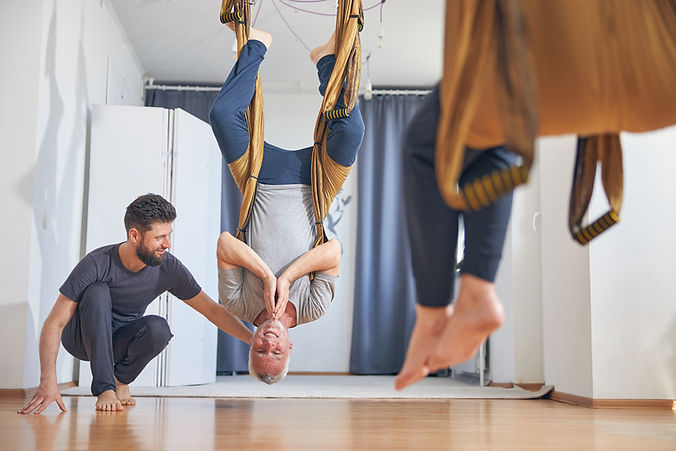
What a Healthy First Experience Looks Like
Your first session should feel structured, respectful, and clear.
Before anything begins, the practitioner should explain what the session involves and what it does not involve. You should understand the format, the time frame, and the cost. Questions should be welcomed.
You are not expected to believe anything. You are not required to share more than you are comfortable sharing. You are not obligated to commit beyond the session you booked.
During the experience, you should feel safe to pause, ask for clarification, or adjust. A responsible practitioner does not pressure you into emotional intensity or dramatic breakthroughs.
Afterward, you should feel informed, not dependent. Supported, not persuaded. Clearer, not confused.
Progress in this space is often subtle. It may look like increased awareness, improved regulation, new insight, or a shift in perspective. It does not require spectacle.
A healthy first experience leaves you feeling grounded and capable of making your own next decision.
Your Role in the Process
Exploration works best when it is active, not passive.
No practitioner replaces your judgment. No modality overrides your lived experience. These approaches are tools, and tools are most effective when used with discernment.
You are allowed to ask questions. Compare options. Decide something is not a fit.
Balanced exploration means staying curious while remaining grounded in your own reasoning and responsibility.

Ready to explore?
If you feel oriented and ready to take a next step, choose the path that matches where you are:
Find a Practitioner →
Explore Modalities →
Browse Events →
Other Frequently Asked Questions →
There is no required order. Start where it feels clear.